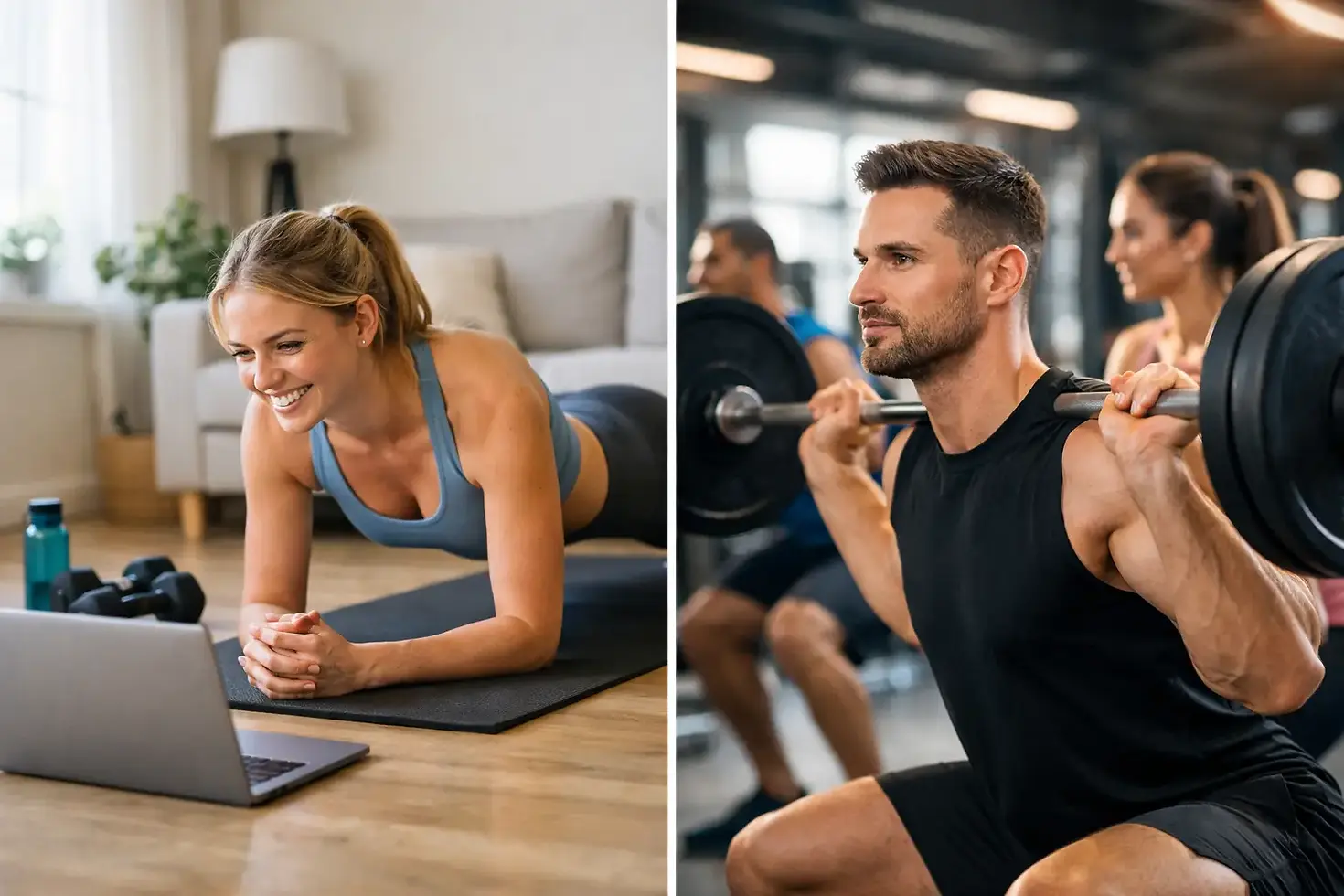
Home Workouts vs Gym Classes: Which Fits?

Some workouts look perfect on paper until real life gets involved. The class timetable clashes with school pick-up. The living room workout gets interrupted by emails, deliveries, or the simple temptation to sit back down. That is why the question of home workouts vs gym classes is not really about which is better in theory. It is about which one you will actually keep doing when your week gets busy.
For a lot of adults, especially when work, family and energy levels are all pulling in different directions, consistency matters far more than having the "best" plan. The right option is the one that feels realistic, supportive and repeatable. Sometimes that is your front room and a mat. Sometimes it is a booked class where someone else has already done the planning.
Home workouts vs gym classes: the real difference
At a glance, the difference seems obvious. Home workouts give you convenience. Gym classes give you structure. But in practice, the gap is a bit more personal than that.
Home workouts suit people who need flexibility above all else. If your schedule changes from one day to the next, being able to train at 7am, 1pm or 9pm without travelling can be a genuine game changer. Even a short session can feel worthwhile when you do not have to factor in a commute, changing facilities or waiting for a class to start.
Gym classes offer something different. They create a fixed moment in your week. You show up, follow the session, and leave knowing you have done something good for yourself. For many people, that external structure is exactly what has been missing. You are not left choosing the workout, setting the pace or wondering whether you are doing it right.
Neither route is automatically more effective. Results still come from regular effort, decent recovery and a plan you can stick with. The main difference is how each option supports your behaviour.
Why home workouts work so well for busy adults
The biggest strength of home training is that it removes friction. When exercise feels hard to fit in, small obstacles matter. If getting active means travelling across town after work, finding parking, or trying to make a 6.30pm class after a stressful day, it is easy to skip it. If it means putting on trainers and pressing play in your own home, the barrier is lower.
That matters for people who are rebuilding routine. If you have fallen out of exercise and want to feel more energised again, starting small often works better than trying to become a different person overnight. A 20-minute strength session at home, done three times a week, can be more useful than an ambitious class plan you keep cancelling.
There is also privacy. For anyone who feels self-conscious, unfit or simply not ready for a busy gym environment, home workouts can feel safer. You can move at your own pace, pause when needed and build confidence without feeling watched.
The catch is that convenience can slide into inconsistency. When your workout is always available later, later can become never. Home sessions also demand a bit more self-direction. Even with excellent apps and videos, you still need to decide to start. That is easy on motivated days and harder on tired ones.
Where gym classes have the edge
Gym classes bring energy that can be hard to recreate on your own. A room full of people moving together, a coach setting the tone and music that lifts the session can make exercise feel less like another task and more like a proper reset.
That shared atmosphere is especially helpful if motivation is your biggest struggle. You do not have to arrive feeling inspired. You just have to arrive. Once the class starts, the decision-making disappears. That can be a relief for people who spend all day making choices at work or at home.
Classes also tend to improve accountability. Booking in makes it feel more real. Seeing the same faces each week builds familiarity. A good instructor can spot when your form needs adjusting and help you push a little harder than you might on your own.
For many people in North West London, that blend of structure and support is exactly what turns exercise from an occasional intention into part of normal life. It is less about chasing perfection and more about creating a rhythm that survives busy weeks.
Still, gym classes are not magic. They rely on timing, travel and confidence. If the class schedule does not suit your day, or the environment feels intimidating, it can become another thing you mean to do rather than something you actually do.
Home workouts vs gym classes for weight loss and fitness
If your goal is weight loss, improved fitness or better body confidence, both options can work. The method matters less than the consistency behind it.
Home workouts can be brilliant for building momentum. Walking workouts, bodyweight strength sessions, dumbbell circuits and low-impact routines all have value, particularly if you are getting back into exercise after a long gap. Done regularly, they can improve stamina, mobility and strength without making fitness feel overwhelming.
Gym classes often help people train with more intensity, simply because the environment encourages it. You may move for longer, lift more than you would at home or keep going when you would normally stop. That can support faster progress, especially if your classes include strength work rather than just endless cardio.
But there is a trade-off. A tough class once a week will not beat simple, regular training at home four times a week. Equally, quick home sessions without any progression may eventually stall. The best setup is one that challenges you enough to improve while still fitting your actual life.
Which one is better for confidence?
This depends entirely on what confidence means to you.
If confidence comes from privacy, control and easing back in without pressure, home workouts may be the better first step. They give you space to reconnect with movement on your own terms. That can be a big deal if gyms have felt intimidating in the past.
If confidence comes from guidance, encouragement and feeling part of something, gym classes may help more. A supportive class can remind you that fitness is not reserved for super-fit people in matching outfits. It is for normal people with jobs, children, bad knees, patchy motivation and busy diaries.
Often, confidence grows in stages. Someone might begin at home, build a bit of fitness, then feel ready to try classes. Someone else might use classes to create routine, then add home sessions between them. It does not have to be one forever.
Cost, convenience and the reality check
Cost matters, especially if you are trying to make fitness sustainable rather than short-lived. Home workouts are usually cheaper. Once you have a mat, a couple of dumbbells or resistance bands, you can do a lot without paying for each session.
Gym classes cost more, but the value is not just the workout itself. You are paying for coaching, atmosphere, equipment and accountability. For some people, that extra investment makes them more likely to show up, which makes the spend worthwhile.
Convenience also has layers. Home workouts are logistically easier, but mentally they can be harder because your everyday distractions are all around you. Gym classes are less convenient on paper, yet easier to commit to because they happen in a place designed for exercise.
This is where honesty helps. If you know you rarely push yourself alone, a cheaper option is not automatically the better one. If you know your schedule is chaotic, an ideal class plan may be unrealistic no matter how motivating it sounds.
A smarter way to choose between them
Instead of asking which option is best overall, ask which problem you are trying to solve.
If your main issue is lack of time, home workouts may be the most practical answer. If your issue is low motivation, gym classes may give you the lift you need. If confidence is the barrier, start with the setting that feels least intimidating. If you get bored easily, variety and social energy may matter more than convenience.
There is also a strong case for combining both. One or two classes a week can give you structure, while short home sessions keep you moving on the other days. That kind of hybrid routine often works well for adults who want results without feeling locked into a rigid schedule.
At PopFitness, that is the bigger point. Fitness should fit your life, not compete with it. The most effective plan is rarely the flashiest one. It is the one that keeps showing up with you through school runs, meetings, low-energy days and the weeks when motivation is nowhere to be found.
If you are choosing between home workouts and gym classes, do not worry about picking the perfect option. Pick the one that feels manageable now. Once movement becomes part of your week again, you can always build from there.


Comments