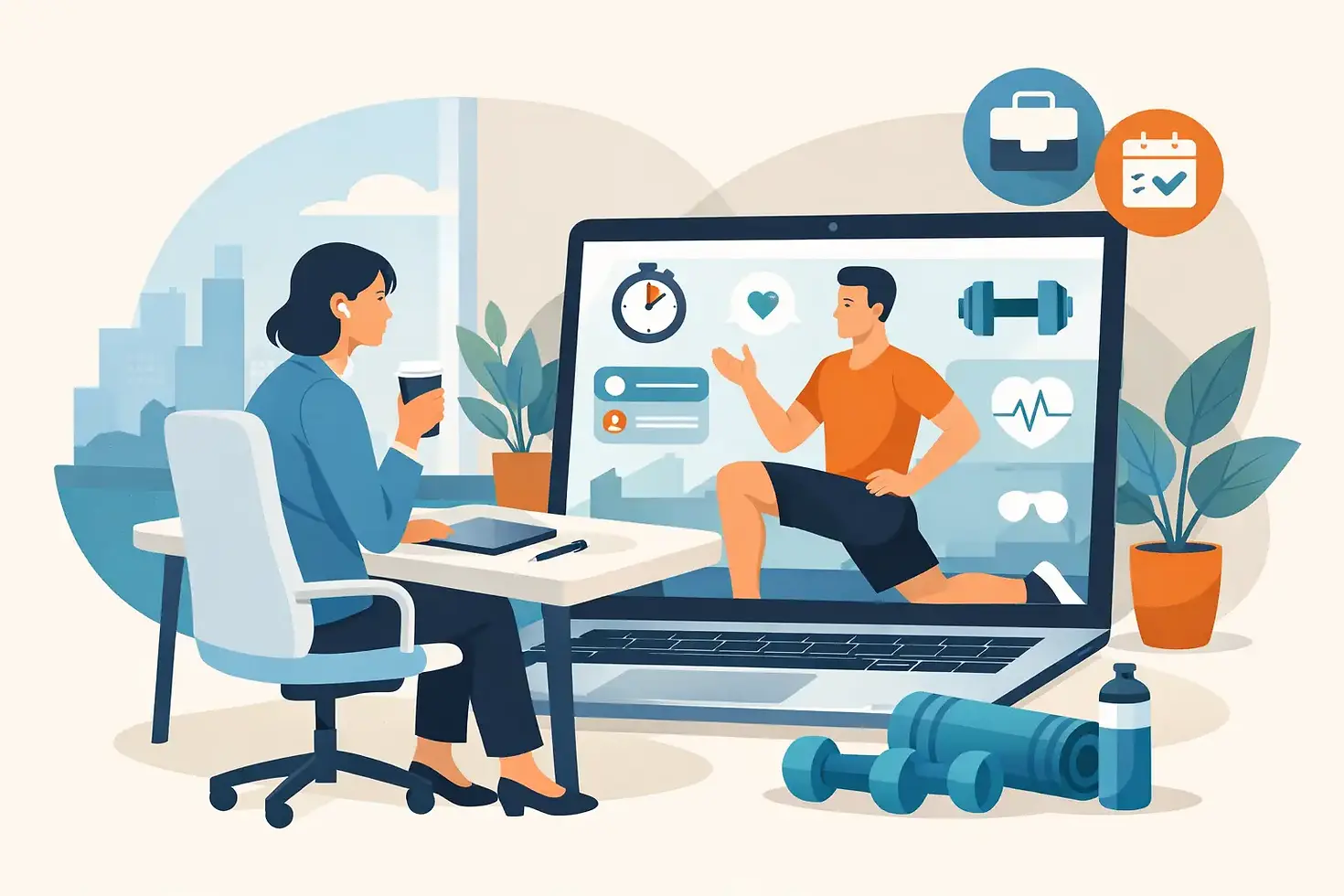
Online Fitness Coaching for Busy Professionals

Your calendar is full before the week even starts. Meetings run over, the school run shifts your morning, dinner needs sorting, and somehow exercise keeps getting pushed to "tomorrow". That is exactly why online fitness coaching for busy professionals has become such a practical option - not because people care less about fitness, but because they need a way to make it work in real life.
For a lot of adults across places like Colindale, Wembley Park, Hendon and Mill Hill, the issue is not knowing that exercise matters. It is trying to fit it around jobs, family life, commuting, low energy and the mental load that comes with doing everything at once. When fitness feels like one more demand, it is easy to drop it entirely. Good online coaching changes that by making training feel manageable again.
Why online fitness coaching for busy professionals works
The biggest advantage is flexibility, but not in the vague way fitness adverts usually mean it. Real flexibility means your plan fits your actual week, not an imaginary version where you have endless time and motivation. If you can train three times one week and twice the next, that can still work. If one session needs to happen in your living room before 7am, that can still count. If you are travelling for work or dealing with a chaotic family week, your coaching should adjust rather than make you feel like you have failed.
That matters because consistency is rarely built through perfection. It is built through plans that survive ordinary life.
Online coaching can also feel less intimidating than stepping into a busy gym when you already feel out of practice. Many people in their 30s, 40s, 50s and beyond are not looking for a hardcore training culture. They want guidance, structure and a clear sense of what to do. They want to feel stronger, move better, improve their energy and maybe change how they look, without feeling judged while they figure it out.
The right coach gives you direction without adding pressure. That balance is a big reason online support suits professionals who are already carrying enough stress elsewhere.
What good online coaching actually looks like
There is a big difference between a generic app and proper online fitness coaching for busy professionals. One gives you a library of workouts and hopes you stay motivated. The other takes your routine, limitations, goals and schedule seriously.
A strong online coaching experience usually starts with a realistic look at your life. How much time do you genuinely have? What type of exercise do you enjoy, or at least not dread? Are you returning after years away from training, managing old injuries, dealing with poor sleep, or trying to rebuild confidence after a difficult stretch? Those details matter.
From there, your programme should feel personal and usable. That might mean 30-minute strength sessions at home, short mobility work between meetings, or gym-based sessions if you already have access and prefer that environment. It could include step targets, habit support, nutrition guidance or regular check-ins to help you stay on track. The best plans are not the most complicated ones. They are the ones you can actually stick with.
Accountability is often the missing piece. Left alone, most busy adults are not short on good intentions. What slips is follow-through. A coach gives shape to the week and helps you keep going when motivation dips, which it always does at some point. That kind of support can make a huge difference, especially if you have tried to restart on your own several times before.
The real benefits go beyond weight loss
Weight loss is a common goal, and there is nothing wrong with that. Many people want to feel more comfortable in their clothes, improve body composition or feel more confident again. But once coaching starts working, the benefits often show up elsewhere first.
Energy is usually one of the earliest wins. When you move more consistently, sleep a bit better and stop swinging between all-or-nothing efforts, everyday life tends to feel easier. You may notice less stiffness getting out of bed, more patience at home, or a clearer head during the afternoon slump.
Confidence also changes in a quieter way. Not in a dramatic overnight transformation, but in the steady feeling that you are back in charge of yourself. You said you would train twice this week and you did. You are stronger than you were last month. You can walk upstairs without feeling as winded. You are starting to feel more like yourself again.
That matters just as much as the visible results.
What to watch out for when choosing a coach
Not all online coaching is created equal. Some programmes are too rigid for real life, while others are so hands-off that you could disappear for weeks without anyone noticing. If you are busy, you need support that feels structured but realistic.
Look for coaching that respects your schedule rather than trying to dominate it. If every plan assumes six gym sessions a week, meal prep every Sunday and perfect sleep, it is probably not built for someone balancing work, family and everything else. A good coach understands that busy periods happen and knows how to keep momentum going without turning one difficult week into a complete derailment.
Clarity matters too. You should know what you are doing, why you are doing it and how progress will be measured. That does not mean everything needs to be overly technical. In fact, for most people, simple and clear is better. Confusing plans often lead to hesitation, and hesitation leads to inconsistency.
It also helps to choose someone whose style makes you feel comfortable. If you respond better to encouragement than drill-sergeant energy, trust that. Fitness support should feel motivating, not punishing. For many everyday adults, especially those rebuilding confidence, approachable coaching gets better long-term results than intimidation ever will.
Making fitness fit around a busy life
One of the biggest mindset shifts is letting go of the idea that fitness only counts when it looks impressive. If you are waiting for the perfect hour-long session, five days a week, in a calm and predictable routine, you may be waiting forever.
A better approach is to build from what is possible now. That might mean two focused sessions during the week and one at the weekend. It might mean walking more, adding short strength sessions at home and aiming for progress over intensity. The point is not to do everything. It is to do enough, often enough, that your body and routine begin to change.
This is where online coaching can be especially useful. It meets you where you are, then helps you move forward without the usual stop-start cycle. Instead of constantly beginning again every Monday, you create a rhythm that can survive a demanding month at work or a half-term schedule that throws everything off.
There are trade-offs, of course. Some people love the energy of in-person training and find they work harder face-to-face. Others need hands-on technique coaching for certain exercises. Online coaching is not automatically the best fit for everyone. But for many busy professionals, the convenience, personalisation and built-in accountability make it far more sustainable than a gym membership they rarely use.
A more realistic way to get results
The fitness industry often sells extremes because extremes are easy to market. Twelve-week overhauls. No-excuses plans. Dramatic before-and-after moments. But most adults do not need more pressure. They need a method that respects the fact they have a life.
That is why a realistic, supportive model works so well. Instead of asking you to become a different person overnight, it helps you make changes that fit who you already are. A parent. A manager. A business owner. A hybrid worker. Someone juggling a lot, but still wanting to feel better in their body and mind.
For many people, that is the sweet spot. Fitness becomes part of life rather than a separate project you can never quite maintain. It stops being about punishment for being "off track" and starts being about momentum, routine and self-respect.
At PopFitness, that is the kind of shift that matters most. Not chasing perfect weeks, but helping real people build something they can keep.
If you have been waiting until life calms down before taking your fitness seriously, it may be worth flipping the idea around. The right support does not require a quieter life first. Sometimes it helps you handle the busy one you already have.


Comments